Why Would We Create a Grip with an Offset Core

why would We make a grip with an offset core?

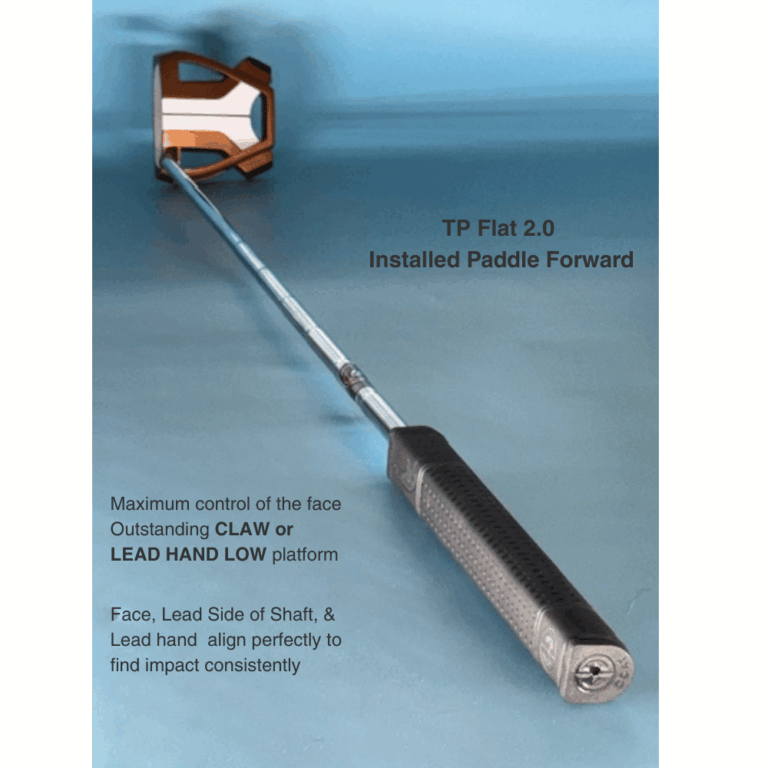
It's all about maintaining the relationship of the face, lead hand, & angles

Golf is such a great game, there are no teamates to help on a blown coverage, misssed assignment, or you got caught out of position.  It will without mercy expose even the smalllest weaknesses in your game and somehow punish even good strokes at the worst times. 

By its very nature it encourages individuality, requires unparalleld repetion, and a level of precision like no other sport to get to the top.  It doesn’t matter what your last name is, who you are or if you tried really hard; there are no participation trophies, it only rewards those who work hard enough and find their best way to go low. 

Behind the TP Series Design

Our design goals are to offer products that simplify the game for every player.  We felt larger sized grips are great to better manage or reduce unwanted face rotation but also could see the larger body creates additional issues for the player by introducing a visual disconnection in the sight picture at address and will affect the relationship of the players hands to the putter face.  Both will make it harder to deliver the face and shaft with consistency.
 
Angles are a consistency killer in a player’s stroke, as compensation(s) will need to be made within a stroke that a player has worked so hard to simplify.  Biases can grow because visually the hands, shaft, and face appear visually disconnected and more importantly, dynamically, the head is not under the hands where it’s always been.  They will find it difficult to line up the shaft and deliver the face at impact.  Often they will respond to the feeling they need to move the ball position backward on the arc in set up further complicating how they now see the line. 
This begins the downward spiral and a loss of repeatability. 
 
To maintain those critical alignments, as the grip grows in size, the shaft core has to be adjusted.

"Our goal was to give every player the benefits of a larger grip without having to make any compensations to their set up or stroke"

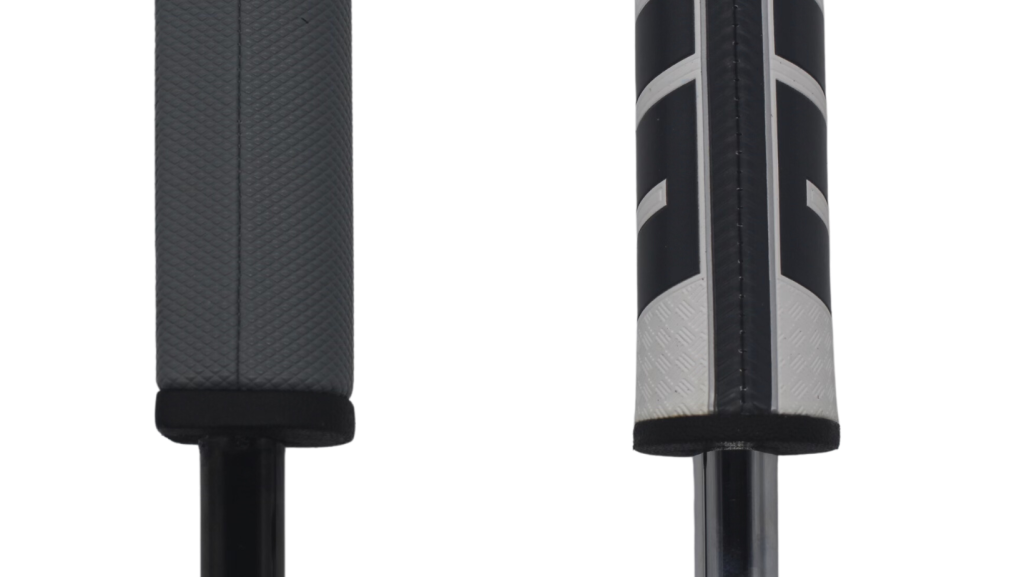
Offset v Centered shaft core

We see in a side-by-side comparison with grip bodies of similar size that if the shaft core is centered versus being relocated away from the center, there could be as much as a full half shaft of offset/onset change. 

Imagine your favorite gamer having double the designed effective offset, what compensation would you need to make?  How would it influence your set up, where you would need to position the ball on the arc, and timing of impact to still hit your lines.
 
Those foundational dynamics would need some adjustments or worse, compensation(s) within the stroke.
 
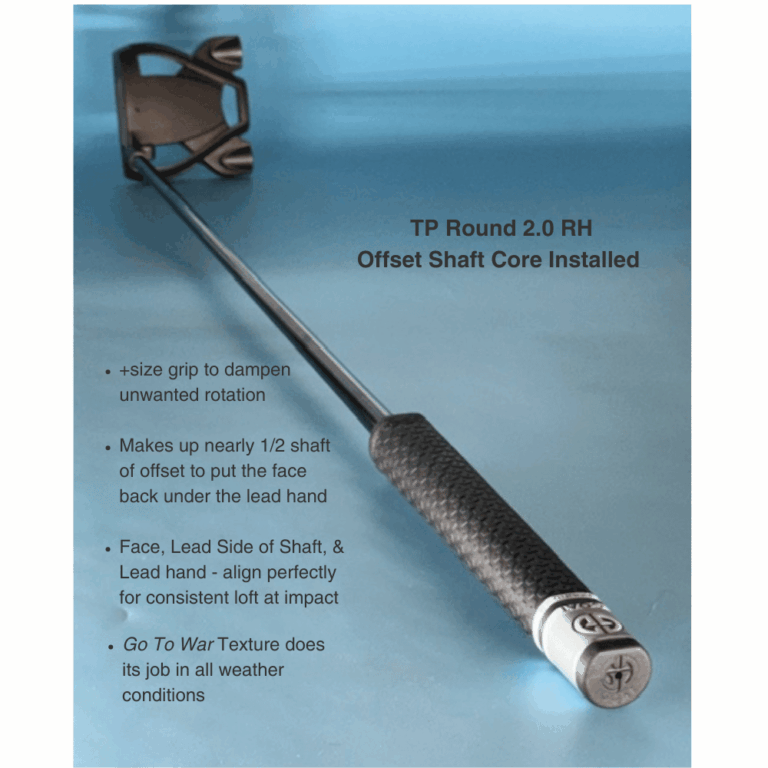
Putter's face, shaft, and lead hand maintain perfect alignment

The angle of the shaft core also has an effect on performance

Some scenarios to consider when installing grips on differing putter designs are how the new grip would affect the relationship with the hands to the face.
Onset or Zero torque designs are very popular because the design reduces unwanted face rotation in motion which is a good thing.  However, because it’s hard to “feel” the toe moving and those built in design features, a leftward miss is somewhat built into the design because: 
 
1. The face is forward of the shaft making it easier to reach the bottom early adding loft and a left looking face at impact.
2. Secondly, the forward shaft lean, if the player unloads it early, will close the face quickly and add loft making the ball come off left of the intended line with less pace.
 
Both design features are big challenges.
 
If we could reduce the amount of onset and suppress the feeling of wanting to unload the shaft lean it would make running a zero torque measurably easier.
 

Moving the lead side of the grip more forward, (with an offset shaft core) would reduce onset or better align the lead hand with the face drastically reduce the dreaded left bias built into the design.

Secondly, remember, angles are consistency killers for your stroke, so regarding consistently delivering shaft lean, we see other press style grips with angled shaft cores can help reduce onset but they now add an angle into the player’s grip at set up. 
 
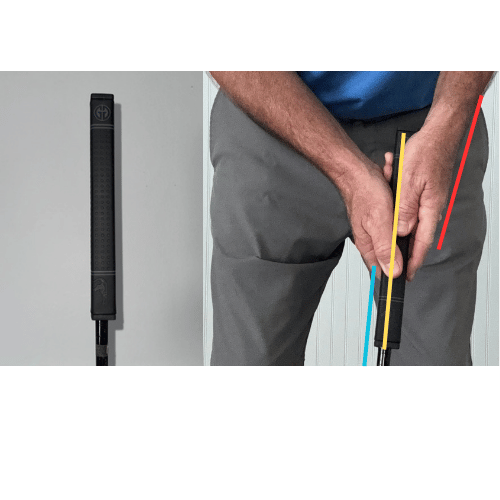
When installed the lead side of the grip and shaft are not at the same angle forcing the players lead hand into extension which is a recipe for unloading the shaft early.
 
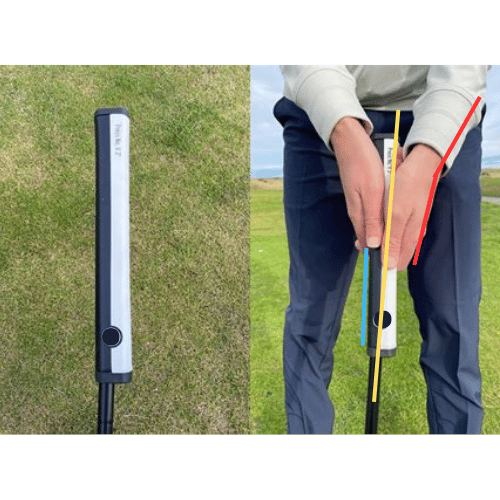
A GOAT grip, with offset core makes up the onset but because the shaft core is not tilted or angled, (it runs parallel with the shaft) the players lead hand can now work “with” the shaft lean rather than at opposition. 


Would you want the hands, grip, and shaft to work together to maintain the shaft lean? or at opposing angles increasing the risk of unloading the shaft early?

Goat TP Series runs at same angles as the shaft to better maintain shaft lean & reduce lead hand extension
When installed, a Goat Grip, runs at the same angle as the shaft making it easier to maintain the shaft lean thru the stroke
Press Style Grips set the players into an extended position making all to easy to unload the shaft lean increasing the chance of a leftward miss
Press style grips set the player's lead hand into extension making it all too easy to unload the shaft prematurely increasing the chances of a leftward miss

“This is why the Goat TP tests so consistently well on SAM PUTT Lab with zero torque designs.”

Share this story